Showing posts with label Turkey. Show all posts

Thursday, August 24, 2023

Greek Week Updated. An 11-Year Review

In my research and investing I stress three things: people, structure, and value.  I look for companies that are controlled and managed by quality people, have corporate structures that align minority and majority shareholder interests and trade at valuations that are below fair value if not outright cheap. Some eleven years and change ago I travelled to Greece, invested in a handful of Greek stocks and posted about the experience (see here).  This post is a follow-up to the trip.

At the time Greece’s financial and economic meltdown was headline news. Images of riots in Athens filled TV screens while news flow centered on its overextended banks, economic decline and possible EU succession. It seemed like a vicious cycle of bad news reports pushing the market down, which caused further panic, which pushed the market down, etc.

By the time I went in late June 2012 Greece’s headline index, the Greek ATHEX Composite, had fallen by nearly 89% in USD from its November 2007 high; and was down about 53% in the previous 12-months.  In other words, it was a very ugly environment.

Been here before I started to look at Greek equities because it reminded me of the 1997/98 Asian financial crisis. In particular Indonesia, where I first started looking at equities in 1989. The crisis in Asia turned into what was possibly the best time ever to buy Indonesian stocks. Like Greece in 2012, stock valuations were very inexpensive, there was very little market activity, and news flow was dreadful with each article seemingly painting a bleaker and bleaker picture as time went on.  

Over the next few decades, Indonesian equities, particularly those of quality companies, had a stunning run. From its 1998 bottom, the headline JSX index increased by over 14x over the next ten years. Quality companies did better. Some 8% of Indonesia’s listed companies went on to become USD 100-baggers. The blue chip ‘big’ cap stock Astra International was up over 200x (see here).

Greek portfolio My July 2012 trip to Greece was time and money well spent. It would have been easier and far less costly to just invest in the US listed Greek ETF (GREK) or the two USD listed ADRs, than to spend 10-days in Athens visiting companies and talking to anybody and everybody who could tell me about the background and reputation of Greek companies and business families.

The methodology for selecting stocks is the same I use currently. I buy stocks based on the three key criteria stated in the first paragraph of this and most of my other posts. Good people, alignment of interests between minority and controlling shareholders, and generational low valuations. At the time I went, Greece was the world’s least expensive market trading at 3.6x its last ten-years inflation adjusted PE ratio. At these levels, and with all the negative news, just about everything was value so I could concentrate on quality (people and structure).

I invested in six stocks after my trip. They were Jumbo (stock symbol BELA), Public Power Corporation (PPC), OPAP–Greek Organisation of Football Prognostics (OPAP), Motor Oil Hellas (MOH), Hellenic Exchanges (EXAE), and Folli Follie (FFGRP). I dabbled in others, but this was my core long-term portfolio. They were initiated at equal weights.

    Jumbo is a retail chain of toy stores that also sells other household items. It’s family founded and still run and managed by its biggest shareholder and founder, Apostolos Vakakis (https://www.e-jumbo.gr/)

   Public Power Corporation, now known as the PPC Group, is Greece’s leading electricity producer and supplier. The government has been divesting since 2016, but retains a 34.1% stake (https://www.dei.gr/en/)

    OPAP is the largest gaming/betting company in Greece. In 2013 the Greek government sold its remaining stake to a private equity fund (https://www.opap.gr/)

    Motor Oil Hellas is one of Greece’s largest oil refining and petrol retailers. It’s controlled by the Vardinogiannis family (https://www.moh.gr/en/)

    Hellenic Exchanges, better known as the Athens Exchange Group, operates Greece’s stock exchange (https://www.athexgroup.gr/)

    Folli Follie is a retail chain of affordable luxury items such as jewelry, watches, handbags and other accessories. In 2018 it was revealed that the group’s management inflated sales and profits via fake documents with the founding and major shareholders, the Koutsolioutsos family, reaping the benefits (https://www.follifollie.com/cm-en/)

Readers should note that while I initially bought the stocks above, I did not hold this portfolio over the last eleven years. Most of the money I earned from “Greek Week” was invested in a fund I started in 2017. It uses virtually the same methodology and process I used to select stocks in Greece and elsewhere. Buy quality companies (good controlling shareholders and aligned structures) during a crisis (value).

I do however want to know how my stock picks did over time and I thought readers could benefit from a long-term perspective. In other words, the stock picks are real but the returns are - unfortunately for me - hypothetical.


Decent returns despite a big mistake  As seen in the adjacent charts and graphs my six-stock Greek portfolio did pretty well. Based on just share prices alone, its 11-year CAGR was 14.9%, or a total increase of 360.3%. Not bad and better than the S&P500 over the same period of time, which had a CAGR of 11.5%. 

Note that this includes 130bp per annum of transactions and custody fees. This is what I paid in the most recent quarter on my last remaining holding at my Greek broker. The high percentage is due to the small amount remaining in the account and the fixed/minimum payment for custody, VAT, and transaction fees such as receiving and reinvesting dividends.  Without these charges the six-stock portfolio's CAGR increases to 15.7%. 

Please note that the remainder of this post will disregard custody and other fees.

Including dividends received, and factoring in Greece’s 15% dividend withholding tax, the hypothetical return increases to 491.3%, with a CAGR of 17.5%. Another way to put this is that sticking with the core six stock portfolio over the last eleven years, and just sitting back and collecting dividends, the initial USD10,000 invested turned into USD59,100.

Reinvesting after-tax dividends further boosted returns. About 140 basis points per annum could have been added to the returns by simply collecting after-tax dividends and buying stock in the same company after the dividends were received. While 140bp doesn’t seem like a lot, over 11-years this amounts to USD8,043 or 80% of our original investment. The CAGR from this simple after-tax dividend reinvestment strategy would have been 18.9%, or USD67,100. 

Note that these calculated returns include a 100% loss in one of the six stocks I selected. Folli Follie turned out to be cooking the books and its price crashed to virtually zero when the fraud was exposed in 2018. The CAGR return of a five-stock portfolio, without Folli Follie, would have been 20.9%, for a hypothetical total of USD80,600.

Note that in all scenarios, the core portfolio return was much better than US listed Greek ETF, GREK, which is not too far from where it was eleven years ago. Its lethargic performance is mostly due to the abysmal showing of Greek banks, which were a big proportion of the ETF and still are at about 30%.

In retrospect, the best decision I made was not investing in Greek banks. Banks are inherently leveraged and when things go bad at banks, they really go bad. This happened in Greece with the banks going through several recapitalizations. Stock prices of the big four Greek banks fell by over 99% between then and now.


Coulda, shoulda done better While the return of my core portfolio was not bad, it could have been better. The best performing holding, Jumbo, was just the 15th best performing Greek stock over the last eleven years. The best, and one that I was a aware of at the time, was Epsilon Net, a software company whose share price is up nearly 200x in the last eleven years. Another IT company, Quest Holdings, is the second best performing stock in Greece having risen by 45x in the last eleven years. Other tech companies dominate the list of the ten best performing stocks over the last ten years. The growth in technology over the last eleven years did not pass Greece by. Nor did it pass over more savvy investors than myself. 


Contrast to Turkey. As noted in the original blog post the neighboring Turkish market was hitting all time highs when I was in Greece in 2012. I didn’t go there, but suspect the mood in Istanbul was much better than the depressed mood in Athens at the time. I don’t remember anybody recommending Turkish stocks, but I distinctly remember that almost nobody was recommending Greek stocks. However, things go in cycles and this certainly happened in both countries. Over the next eleven years the Turkish market, as measured by their headline BIST100 index fell 28.9%.


Learnings

  • People, Structure, Value. A key takeaway from the trip and this review is that my core investment strategy works.  While this is just one example, I’ve used the same strategy elsewhere and it appears to be effective, with my handpicked portfolios outperforming most comparable headline indexes and ETFs.
  • Choose a good time frame. One reason the portfolio looks good is that Greek stocks have had a good run recently.  The Athens index has been one of the world’s best, rising by 44% so far this year and 58% in the last 12-months alone. If we had done the same exercise one year ago, the portfolio’s dividend reinvested CAGR would have been just 12.9% instead of 18.9%. Holding tight in just the last year added USD33,570 to our hypothetical returns.
  • Hold long and strong.  Psychologically, it would have been hard to hold Greek stocks over the last eleven years. During this time there were numerous protests, government changes, and a tremendous number of articles and news shows about how poor and hopeless the situation in Greece had become. In 2013 a big index provider relegated Greece downward from a developed to an emerging market. Investors had to put up with four years of capital controls which made it near impossible to get money out of Greece (June 2015 to Aug 2019). As can be seen in the charts, after a very nice two-year run, the next seven years were humbling with most stock prices below their recent high water mark.
  • Dividends matter, especially if they’re reinvested. As noted in the text above, dividends reinvested increased the returns. Shares bought with dividends this year, will earn even more dividends next year, and so on, and so on. In the last eleven years after-tax dividends received from Jumbo and OPAP were 171% and 193% of each stock’s respective purchase price.
  • Don’t be a dividend hog. The best return of the six stock portfolio, PPC, did not pay any dividends. This is ironic as typically utilities - such as PPC - are bought for their steady yield. This is what I call a ‘double negative’.  An out of favor sector/stock in and out-of-favor country.  Who would ever want to buy a government owned, non-dividend paying utility in a seemingly bankrupt country going through a financial crisis?? It was amazingly cheap on a 10-year average PE and DY; and was also very inexpensive on a market cap to power supply capacity. Double-negatives don’t always work – they can and do go bankrupt or get delisted – but when they do it can be very sweet.. 
  • Be cognizant of global trends. Of the top ten performing stocks in Greece in the last eleven years, half were IT or technology related. Globally this has been one of the best performing sectors and so it was in Greece.
  • Don’t buy frauds. Not much to add here. I made decent money on Folli Follie as I sold a year or so before the fraud was exposed. It’s good to be lucky, but this was making money for the wrong reason. I sold for two reasons. First, was the lack of people in their stores. Second, the great John Hempton (see here) thankfully noted that Folli Follie was a fraud as their numbers didn’t add up.
  • Avoid banks. As noted above the stock prices of Greek banks were abysmal over the last 11-years. Please see this Financial Times article which does a much better job than I in explaining why banks are very risky investments (link is here).


15 July 2012 - 15July 2023
(USD)
NameTotal ReturnCAGRAsset Value 15 July 2023 ($10,000 start)
Portfolio With Fees (Without Dividends)360.3%14.9%46,031
Portfolio (Without Dividends)396.2%15.7%49,619
Portfolio (With Dividends)491.3%17.5%59,132
Portfolio (With Dividends Reinvested)571.8%18.9%67,175
Portfolio Excluding Folli Follie (With Dividends Reinvested)706.1%20.9%80,610
S&P 500232.0%11.5%33,200
BIST100 (Turkish Headline Index)-28.9%-3.1%7,110
Greece Hellenic Petroleum
(Now Hellenic Energy Corp.)
166.2%12.1%26,620
Lamda Development371.2%19.4%47,120
Alpha Services & Holdings-95.2%-28.0%477
National Bank of Greece-99.5%-39.3%47
Eurobank Ergasias Services & Holdings-99.8%-45.5%23
Piraeus Financial Holdings-100.0%-60.4%1
CAGRCAGR with dividends reinvestedTotal Dividends Received/ Initial Investment
Jumbo22.0%25.7%171.2%
Public Power Corporation23.4%23.7%3.7%
OPAP13.8%21.2%193.4%
Motor Oil Hellas14.4%18.1%126.3%
Hellenic Exchange7.3%10.7%70.0%
Folli Follie-100.0%-100.0%12.9%


Many thanks to Smith Lee ChengChung (李正中) for crunching the numbers, preparing the visuals and help with additional research. Smith will be a year four student at National Taiwan Normal University this Fall where he’s an English major.

Disclosure: The above is written for entertainment purposes only and should not be relied upon for anything at all, especially financial and investment advice. One should assume the authors have financial interest in one or all of the companies mentioned in this post.

Monday, January 3, 2022

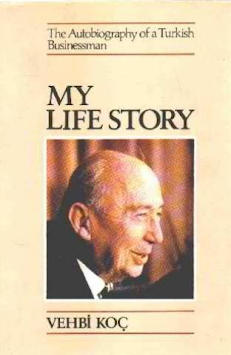
Book Review - My Life Story, The Autobiography of a Turkish Businessman, by Vehbi Koc

In my research and investing I stress three things: people, structure, and value.  I look for companies that are controlled and managed by quality people, have corporate structures that align minority and majority shareholder interests and trade at valuations that are below fair value if not outright cheap. This post is about people and specifically a review of Vehbi Koc’s autobiography, My Life Story. Vehbi Koc is the founder of the Koc Group, Turkey’s largest conglomerate.

My interest in Turkey began in the Summer of 2018 when its currency and stock market were falling and it suddenly appeared on my favorite value screen. I like to look for potential investments during a financial crisis as prices tend to overshoot and true bargains can be found. I’d never been to Turkey and never really thought much about the country before. But boy was I glad I made the trip! Istanbul is a very happening city, and I met a large number of switched-on business people and financial professionals.

Of several books on Turkey I bought and started, this is the only one that I finished. I think it’s amongst the best books I’ve read, and it’s certainly my favorite about a business leader. Not only does it give an account of the group’s founder and how he became Turkey’s richest individual, but also a first-hand view of modern Turkey from someone who helped build it.

It’s well written/translated; and a very good way to understand the country, its history, and what it was like living and doing business in that part of the world between the 1920s and 1970s.

For those who don’t know, the Koc Group is Turkey’s largest and most prominent business. According to its January 2021 corporate presentation, the Koc group accounted for 8% of Turkey’s GDP, 9% of its exports and 12% of the total value of all companies listed on Bursa Istanbul, the country’s stock exchange (which Vehbi Koc helped set up, see here). The fact that it’s such a big part of Turkey’s economy is testament to Vehbi’s acumen, longevity and openness to new ideas and businesses.

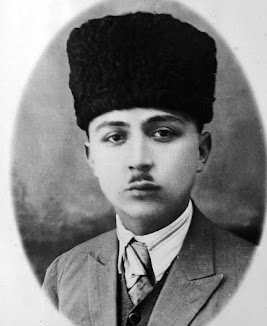
Vehbi’s life spans the creation and development of modern Turkey. He was born in 1901, when Turkey was still the centre of the Ottoman Empire and 22 years before Kemal Ataturk became president and brought Turkey into the modern age. “If we take 1923 as my start, by 1973 I had worked for fifty years. During these fifty years I lived under Ataturk, Inonu, Bayar, the Revolution of 1960, the Justice Party, and various coalitions”.

Early Turkey. One of my favorite sections is his description of life in Ankara in the early 1900s. “I was enrolled at the Lame Hodja’s School. There, the children were taught how to read from a primer in the Arabic alphabet.” (Turkey introduced the Roman alphabet in 1928).  “There were no cars in Ankara in my childhood. I remember clearly the first car I saw. A Catholic merchant named Arslanguller brought it to Ankara. The whole of Ankara massed in front of the Tashan. They were astounded and watched open-mouthed as it started to drive to the station. It was nicknamed ‘the infidel’s car’". (The Koc group later partnered with Ford and Fiat and is today the largest automobile manufacture in Turkey).

“Parents wanted their children to be boys, and four children were expected. ‘One for the mother, one for the father, one for death and one to spare.’ The family was resigned to the probability that one of the boys would die during his military service.”

“When hotels asked my birth date, I used to give the first date that came into my head” (it was not customary for people in Ankara to record birthdays when he was born)

Carrying on a Family Tradition. “My grandfather, Koczade Haci Mehmet Efendi, was an active man with a good reputation in Ankara. He served on the Provincial Council, occasionally undertaking public contracts, and was engaged in the wheat trade. My father, Koczade Haci Mustafa Efenci…and his family lived on the rents he collected from the property left him by his father.” “Our house was on the main street in one of the better quarters of Ankara. There were four shops on the ground floor, and my father leased these shops to non-Moslem tradesmen”.

He married his first cousin, and was realistic of the problems this may bring. “My parents decided upon the daughter of my mother’s sister as my bride-to-be.” “There was a tradition in Antolia that young people married their close relations., both to preserve the family fortunes, and with the hope that they would get along together. Intermarriage sometimes caused hereditary disorders to be perpetuated in children”

Learned from the world around him. “The only tradesmen in Ankara at the time were the Greeks, Armenians, and Jews. The Moslem Turks, although they were the real rulers of the country, were usually employees of these three minorities, and generally led simple lives. The best homes, shops and summer houses belonged to the non-Moslems…” “I used to envy the Christians going to their orchards with their beautiful animals and fine carriages, and I secretly wanted to be like them.” “So, it was then that I decided to go into trade”. “I was determined to give up school immediately…” (He left school at 15 years old)

Born in the right place, at the right time “After Ataturk made Ankara the capital, the city grew rapidly. Construction and public works began everywhere in the city. I gave up the grocery, shoe leather and hardware businesses and went into the trade of construction materials.”

Ambitious from an early age. “I was getting more and more independent of my father. My desire was always to expand the business, but this always met with father’s objections. Invariably, mother would side with me and I would have my say at the end. For her faith in me I have always been grateful to my mother.” 

“Each time I went from one field of business to another my father would be furious, fearing lest I squander my capital and put him at a loss”.

Not everything worked out.  “I’ve have already spoken of my first manufacturing venture, my partnership in the Koc Iron Pipe Works…It did not prosper because there was not enough operating capital.”

“I have learned through bitter experience that whenever I joined an industry which had been set up by others, the results were dismal. People who have set up a business and then have met with no success always propose partnership. The root of their failure is inevitably that either the financial estimates were erroneous or that the entire venture had been misconceived. We met with failure in three or four other businesses that I joined when they were floundering.  We wasted time and capital, and finally had to close them down.”

“In September (1939) the Second World War broke out. Prices began to sour…Our capital melted away, credits were exhausted and prices were still rising. All of us…were in deep trouble.”

Connected, but not political. “Because Ankara was the capital, I met many of the leaders of the party and of the government through my expanding activities. We and the Inonu[1] family became friends, but I never called on him without an invitation, except once or twice when he was sick’.

“Under both the one-party system and the multi-party system gossip and jealousy have brought me great troubles in my business life.”

“As soon as our bid was accepted, the gossip started, including rumors' that I had bribed Nevzat Bey[2] a million liras and stood to make a million liras myself.” We got twenty thousand liras which was our five percent commission on the contract and the work took four years to complete. The money we got was not even enough to cover our expenses.” “…the whole business was unpleasant for both Nevzat Bey and myself”.

“After much thought I liquidated the Tetico Company and cut off all business with the State. This put a stop to government contracts, but also to the gossip and rumors, and I was more at peace with that”

People Centric. The book is chock full of names of those who he’s worked with and met, friends, colleagues and business partners. It sounds like he was a very good judge of character; befriending capable people and supporting those who helped him. While the original company was set up with mostly family members, he hired and invested in projects regardless of the person’s ethnicity or religion. He gave equity to people he trusted.

“Baker Company…had a very capable man, Isak Altabef…” “As our contacts with Altabef increased, my appreciation of this efficient man grew. I learned he was the son of a poor Jew in Kasimpasa.” “In1937 Altabef joined our company in Istanbul as a partner. Thus, we formed the firm Vehbi Koc and Associates Collective Company, dividing the shares as 55 per cent Vehbi Koc and 15 per cent each to Israil Anastasyan, Isak Altabef and Emin Gurag.”

Local boy with broad outlook. “My relationship with the former Standard Oil, the present Mobil, thus dates back to 1928. Our corporation has continued for many years. There was not the slightest disagreement between us as to sales or payment. I believe I am the oldest distributer of Mobil in Turkey."

“Our first agreement with Ford was concluded in 1928.”

“In 1949 very few farmers used tractors.” “Our firm was the dealer for American Oliver tractors.” “…the first Oliver tractors were brought in under the Marshall Plan.”

“Our first trip to Europe changed our outlook and gave us fresh ideas. From then on I have always tried to be an innovator”. “We visited Budapest, Vienna, Berlin, and Paris. The people were different, buildings were larger and the cities throbbed with vitality. In many respects they were far more advanced than our country. We were open mouthed at everything we saw.” (He first visited Europe in 1931 – when he was 30 years old.)

“I noted on my trips to Europe that all the major firms there were incorporated. Seeing that none of the individual firms in this country lasted long, I decided to set up a joint stock company”.

“My first trip to the States in 1946 marks the beginnings of my transformation from a tradesman to industrialist”. “I wanted to be made an agent by the big American firms in my sphere of activities."

Instrumental in establishment of a stock exchange in Turkey “A capital market was essential for Turkey in order to encourage people to put their savings into industrial investments and to guide people into investing their small savings in sound enterprises. I had participated in numerous meetings and conferences on this subject and had submitted my opinions to the relevant government authorities both personally and in writing. In setting up the Aygaz Company, I thought I would conduct a small-scale experiment in public participation and invite the public to invest their savings in the enterprise.” “The minor experiment proved once more how urgently a capital market was needed and how ready and willing the public was to put their money into reliable investments”.

Early to institutionalize “I had seen in advanced nations how firms were passed down from generation to generation. So, it dismayed me to see firms in Turkey deteriorate and dissolve after the deaths of their founders.” “…it would be unrealistic to have the same expectations and confidence for the coming generations, with whom my ties would naturally not be as strong as with my children.” “I realized…that continuity could be ensured only through corporations since corporations have more stability than family companies.” “The Siemens Company, too, passed through the same stages. Grandfather Siemens, founder of the firm, was its first and sole owner.” “The Ford Motor Company is another example. …originally a family corporation, (it) is now publicly owned.”

Vehbi had to deal with wide forex swings. “From 1947 until 1958 the official rate of exchange of (the) Turkish currency was based on a parity of $1 = T.L. 2.80. The black-market rate jumped to T.L. 15 and this played havoc with the country’s economy. The prices of imported goods rose and there was a lot of illegal trading in the foreign exchange. The consumer goods manufactured locally were never sold at normal profit margins, according the official rates of exchange. Tax evasion was rife. This state of affairs went on until 1958.” “In 1958 the currency was devalued. The official value of the dollar was raised to nine liras. Nevertheless, the black market continued at fifteen or sixteen liras to the dollar. Economic disruption, favoritism within the ranks of the political parties, nepotism, all went on as before and we all suffered.” “During this period some businessmen got huge sums from illegal operations, but none of them were able to keep their winnings.”

Likely influenced an entire generation of entrepreneurs in Turkey. Although not part of the book, Vehbi was thanked in at least two other autobiographies written by Turkish business tycoons. Both Sarik Tara (founder of the large Enka construction group) and Kamil Yazici (co-founder of the largely consumer goods Andolu group) wrote about meeting with Vehbi and the guidance he gave to them early on.  The Anadolu group directly benefitted, as Vehbi Koc passed on setting up Turkey’s first beer brewery.  Anadolu Group took up the reins and founded Efes, which became their cash cow. Efes is the largest selling beer in Turkey and the second largest in Russia and other countries in the ex-Soviet Union. Later, the Andaolu group bought Migros, one of Turkey’s largest supermarket chains, from the Koc group.

Live Long and Prosper. He was very concerned with his health, walked whenever he could and visited famous/reputed doctors and clinics when he travelled. This allowed him to live to 94 years old. His longevity may be a key reason that to this day the Koc group has a better reputation than the Sabanci group, Turkey’s second largest business group. Its founder, Haci Omer Sabanci, passed away in 1966 at age 60; a full 30 years before the six-year older Vehbi Koc’s passing. It’s also notable that the vast majority of Warren Buffet’s wealth came after his 60th birthday (see here). Reputations and good investments compound. 

“Since I was in the States, I wanted to have a medical check-up. I had a full check-up at the Ford Hospital.”. “While I was in Chicago, I visited the nearby Mayo Clinic.” “Since my early youth I have been going to doctors regularly and I have a complete medical check-up every six months.” “Every day after lunch I rest for half an hour in a quiet place.” “I believe that rising early, as well as eating meals at regular times, has had a positive effect on my health.”

Lots of charity.  The book devotes an entire chapter on his charity and social works. This is probably a short list given than Vehbi lived another 20 years after its original publication. This included setting up the Vehbi Koc foundation which continues (see here). “We studied the organizations of foundations in Europe and America such as Ford, Philips, Thyssen and Rockefeller, and met often to set up our charter (for the Vehbi Koc Foundation)."


[1] İsmet İnönü was the second president of Turkey, three times prime minister and acknowledged as Ataturk’s right hand man (see here).  

[2] Nevzat Tandogan, was the fourth mayor and governor of Ankara (see here).